
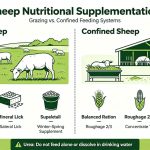
Nutritional Supplementation Methods for Grazed vs. Confined Sheep
Grazing System Relies on natural forage. Key supplemental nutrients are energy, protein and trace minerals. Follow the principle: Mandatory supplementation in winter & spring; optional supplementation in summer & autumn; priority supplementation for special groups (pregnant, lactating and lambs). Confined Feeding System Fully reliant on artificial feeding. The core is to formulate a complete balanced total mixed ration, strictly control the concentrate-to-forage ratio, feeding sequence and drinking water quality to prevent metabolic disorders. Universal Core Rule Both systems require salt and mineral supplementation (via mineral blocks or feed mixing). Extreme caution must be taken with non-protein nitrogen such as urea: never feed it alone or dissolve it directly in drinking water. Nutritional Supplementation for Grazed Sheep Timing & Target Groups for Supplementary Feeding Supplementation is mandatory during winter/spring dry forage periods, late gestation, lactation, and for weak sheep. Supplementation can be reduced or skipped in lush summer/autumn grazing seasons, except
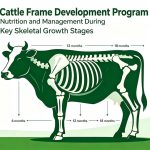
Cattle Frame Development Feeding Program
I. The Optimal Stage for Frame Development 6 to 18 months of age: This is the period of the fastest skeletal growth. After 18 months, the frame becomes fully developed. Feeding regimens will only build fat thereafter, making it very difficult to enlarge the overall frame. After 18 months, shift focus to fattening, weight gain and fat deposition. II. Core Nutrition for Frame Development: Balanced Calcium & Phosphorus, Trace Elements, and High-Quality Forage III. General Homemade Rations 1. Forage (65%–70% of total daily feed; the primary feed for frame development) Priority order: Chinese Wildrye > High-Quality Corn Silage > Peanut Vine Hay > Alfalfa Hay Adequate forage is essential. Insufficient forage causes cattle to develop internal organs and fat rather than growing vertically, preventing proper frame expansion. Avoid excessive single feed sources such as distiller’s grains and soybean residue, which are highly acidic, inhibit calcium absorption, and increase the risk
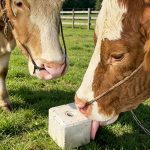
Are Mineral Blocks Necessary for Cattle & Sheep in Summer?
High summer temperatures lead to heavy sweating for cattle and sheep, causing massive loss of salt and minerals. Nutritional mineral blocks provide an easy solution to supplement salt, trace elements and vitamins. Livestock lick voluntarily, with no risk of overconsumption or feed waste, making it a safe feeding solution. In addition, mineral blocks stimulate appetite and encourage livestock to drink more water, effectively alleviating summer heat stress and maintaining steady body weight. Licking blocks promotes saliva production, which balances rumen pH and supports healthy rumination. This improves overall feed conversion rate and cuts down feeding costs in the long run. Well-maintained body condition brings great benefits for your herd: breeding cows and ewes with good summer body scores achieve higher conception rates during autumn breeding season, while fattening cattle and sheep gain weight faster in fall for earlier slaughter. muyork Nutritional Mineral Blocks adopt refined solar sea salt from Tianjin
Nutritional Supplementation Methods for Grazed vs. Confined Sheep
Grazing System Relies on natural forage. Key supplemental nutrients are energy, protein and trace minerals. Follow the principle: Mandatory supplementation in winter & spring; optional supplementation in summer & autumn; priority supplementation for special groups (pregnant, lactating and lambs). Confined Feeding System Fully reliant on artificial feeding. The core is to formulate a complete balanced total mixed ration, strictly control the concentrate-to-forage ratio, feeding sequence and drinking water quality to prevent metabolic disorders. Universal Core Rule Both systems require salt and mineral supplementation (via mineral blocks or feed mixing). Extreme caution must be taken with non-protein nitrogen such as urea: never feed it alone or dissolve it directly in drinking water. Nutritional Supplementation for Grazed Sheep Timing & Target Groups for Supplementary Feeding Supplementation is mandatory during winter/spring dry forage periods, late gestation, lactation, and for weak sheep. Supplementation can be reduced or skipped in lush summer/autumn grazing seasons, except
Cattle Frame Development Feeding Program
I. The Optimal Stage for Frame Development 6 to 18 months of age: This is the period of the fastest skeletal growth. After 18 months, the frame becomes fully developed. Feeding regimens will only build fat thereafter, making it very difficult to enlarge the overall frame. After 18 months, shift focus to fattening, weight gain and fat deposition. II. Core Nutrition for Frame Development: Balanced Calcium & Phosphorus, Trace Elements, and High-Quality Forage III. General Homemade Rations 1. Forage (65%–70% of total daily feed; the primary feed for frame development) Priority order: Chinese Wildrye > High-Quality Corn Silage > Peanut Vine Hay > Alfalfa Hay Adequate forage is essential. Insufficient forage causes cattle to develop internal organs and fat rather than growing vertically, preventing proper frame expansion. Avoid excessive single feed sources such as distiller’s grains and soybean residue, which are highly acidic, inhibit calcium absorption, and increase the risk
Are Mineral Blocks Necessary for Cattle & Sheep in Summer?
High summer temperatures lead to heavy sweating for cattle and sheep, causing massive loss of salt and minerals. Nutritional mineral blocks provide an easy solution to supplement salt, trace elements and vitamins. Livestock lick voluntarily, with no risk of overconsumption or feed waste, making it a safe feeding solution. In addition, mineral blocks stimulate appetite and encourage livestock to drink more water, effectively alleviating summer heat stress and maintaining steady body weight. Licking blocks promotes saliva production, which balances rumen pH and supports healthy rumination. This improves overall feed conversion rate and cuts down feeding costs in the long run. Well-maintained body condition brings great benefits for your herd: breeding cows and ewes with good summer body scores achieve higher conception rates during autumn breeding season, while fattening cattle and sheep gain weight faster in fall for earlier slaughter. muyork Nutritional Mineral Blocks adopt refined solar sea salt from Tianjin